
.png)

August 5, 2026
Getting your vacation rental license is a huge milestone. But most new owners underestimate everything that still has to happen between that approval and a guest actually walking through the door. There's a long list of setup and safety work that has to be handled first, and most first-time owners have never done any of it before. That's usually what pushes people to rush a first booking before the property is actually ready.
Here's a rundown of what tends to get missed, and what to do about it before your first guest arrives.
Buying furniture is the easy part. Getting it into the property undamaged and set up in the right rooms is where things go wrong. Sofas and beds get scuffed or dented in transit, and moving heavy pieces into place can scratch hardwood floors or dent appliances if it's not done carefully. Budget more time and more hands than you think you'll need, and inspect everything for damage before it goes into the room it's meant for, not after.
If you're bringing in a moving company to handle the heavy lifting, it's worth checking their licensing and complaint history before you book, since a bad quote is a lot more common than a damaged floor.
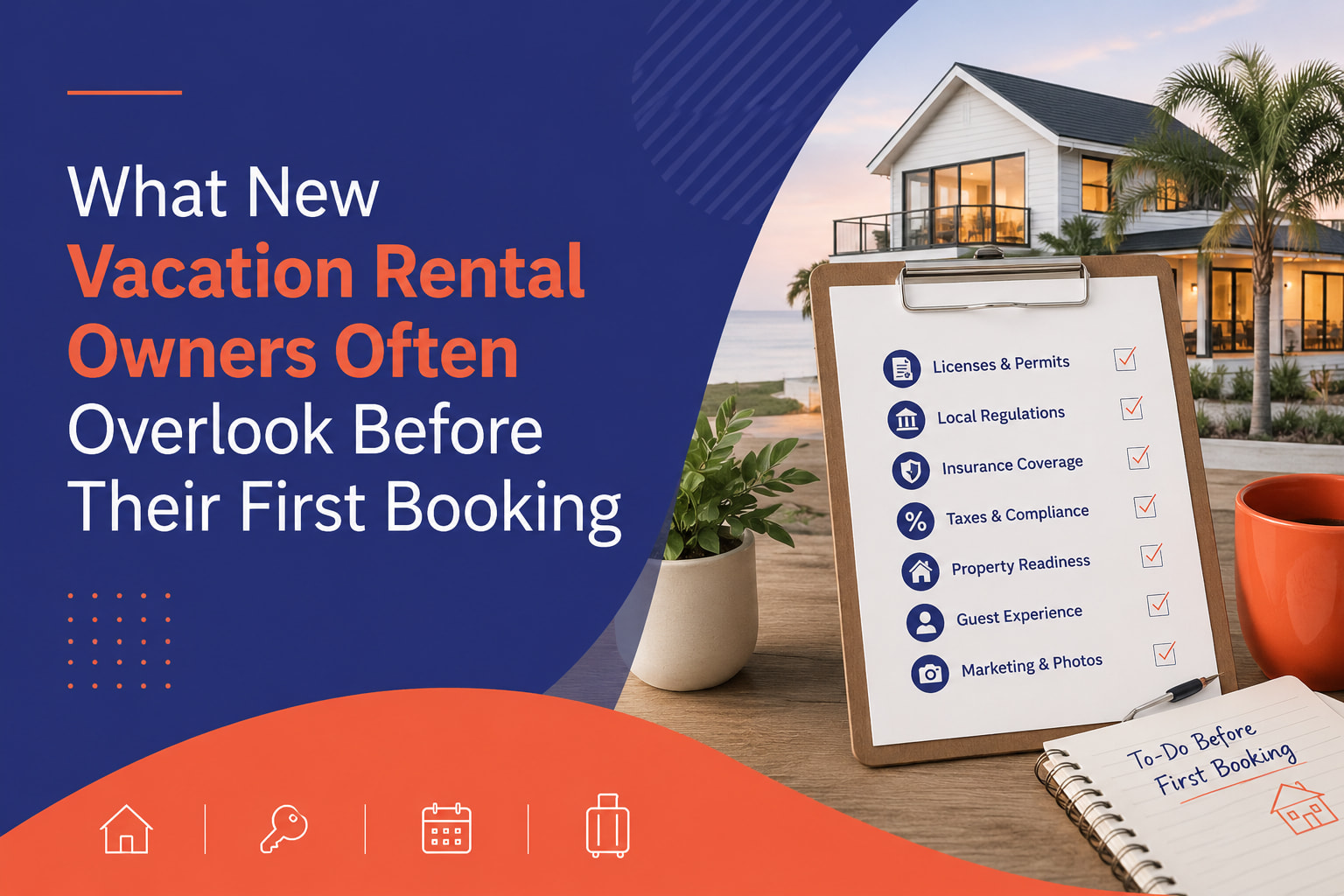
A license doesn't mean the property is guest-ready. Work through this checklist before anyone books a stay:
Smoke and carbon monoxide alarm requirements are set at the state level and vary by property type, so check your state's code directly rather than assuming a general standard applies. The U.S. Consumer Product Safety Commission is a good starting point for general guidance on residential rental safety.
The license covers the right to operate. It doesn't cover everything your municipality expects from you. Depending on where the property is located, you may also need:
If your municipality requires periodic inspections to renew your license, the National Conference of State Legislatures tracks short-term rental legislation by state, and your local business licensing office can confirm what applies to your specific property. Skipping any of this rarely causes a problem immediately, but it tends to surface later as a complaint from a neighbor or a bad review, and both are much harder to undo once your listing is live.
Most new owners assume their homeowners policy already covers a short-term rental. It usually doesn't. The Insurance Information Institute notes that standard homeowners insurance typically excludes commercial activity, and short-term renting falls into that category. Operating without the right coverage can mean a denied claim, a cancelled policy, or a lawsuit you're paying for out of pocket. Talk to your insurer before your first booking, not after your first claim.
Your first few months of bookings are also when you'll collect most of your early reviews, so cleaning quality matters more early on than it might later. Spotted mirrors, dusty ceiling fans, stained grout, or musty linens will undercut even the nicest furniture. A cleaner who specializes in short-term rentals will already know how to work around tight turnover windows and can set up a linen rotation for you, on top of the deep clean your property needs before its first guest.
Build that relationship before you need it. Walk your cleaner through the property, agree on what a completed clean looks like, and settle on a schedule that works for your turnover pace, not after a guest complains about it.
Before your first guest arrives, the logistics of hosting need to be sorted out: keyless entry, wifi, appliance instructions, local recommendations, house rules, and emergency contact information. A short digital welcome guide covers all of it in one place, and some property managers build these for their clients as a standard part of onboarding. Airbnb's own hosting guidance points to clear communication and detailed arrival instructions as one of the strongest drivers of a 5-star rating.
Running a short-term rental becomes a real job once bookings start coming in, on top of whatever else you already do. A property management company turns that ongoing work into a system instead of a constant scramble. Companies like Overland Properties build structured processes covering everything from guest communication to maintenance coordination, and can help just as much with the initial setup as with running the property afterward.
The license is the starting line, not the finish line. Getting the setup right, bringing in professionals for the work that's outside your expertise, and putting processes in place before you need them will make for a smoother first season and every one after it.
Your first guests set the tone for your reputation, so make sure the property is ready for them. If you still need to lock down permits or registrations, explore full-service STR licensing to get it all handled in one place before your first guest walks through the door.


